
Older homes often have layers of previous paint, repairs, caulk, patches, and moisture history that are not obvious until preparation begins. For homeowners researching house painters Vancouver WA, the most useful question is not simply which color to choose. It is what the existing surface needs, how the project should be sequenced, and which preparation decisions will determine whether the finished work looks deliberate months and years after the crew leaves.
For homeowners and businesses in Vancouver, WA, Fast Fox Painting provides residential and interior painting with an emphasis on detailed estimates, careful preparation, premium products, clean workmanship, and a final walkthrough. detailed estimates, careful preparation, premium products, clean workmanship, and a final walkthrough. This guide focuses on the decisions that should happen before or during a professional paint project so the finish supports both appearance and long-term performance.

Featured image – House painters Vancouver WA surface inspection on an older painted home. Image source: Fast Fox Painting
What house painters Vancouver WA Projects Should Address First
1. Loose, Cracked, or Poorly Adhered Paint
1. Loose, Cracked, or Poorly Adhered Paint is one of the first conditions worth evaluating before paint is treated as the solution. Existing paint may be lifting because the original coating was applied to a dirty, glossy, damp, or otherwise unstable surface. That distinction matters because a new coating can make a surface look better for a short period without correcting what is happening underneath it. Painting over weak adhesion can allow the new system to release with the old coating rather than bond to the substrate. In Vancouver, WA, local exposure and the age or construction of the property can make this condition show up differently from one home to the next. A professional pre-paint inspection is designed to separate cosmetic wear from conditions that can affect adhesion, uniformity, or the life of the finish.
The practical response is to remove loose material, feather rough edges, evaluate the surrounding coating, and prime exposed or problem areas as appropriate. The goal is not to add unnecessary steps; it is to create a sound, clean, dry, and appropriately prepared surface before primer or finish paint is applied. When preparation is matched to the actual condition of the substrate, the finish has a much better chance of looking consistent at corners, transitions, repaired areas, and high-wear locations instead of telegraphing the same defect through the new paint.
2. Moisture That Has Not Been Corrected
2. Moisture That Has Not Been Corrected is one of the first conditions worth evaluating before paint is treated as the solution. Stains, bubbling, soft drywall, peeling near windows, or recurring exterior failure can point to moisture rather than a paint-only problem. That distinction matters because a new coating can make a surface look better for a short period without correcting what is happening underneath it. If the source is still active, repainting can hide the symptom while moisture continues to affect the wall, trim, siding, or framing. In Vancouver, WA, local exposure and the age or construction of the property can make this condition show up differently from one home to the next. A professional pre-paint inspection is designed to separate cosmetic wear from conditions that can affect adhesion, uniformity, or the life of the finish.
The practical response is to identify and correct the water source first, allow the surface to dry, and then repair and coat only after the substrate is ready. The goal is not to add unnecessary steps; it is to create a sound, clean, dry, and appropriately prepared surface before primer or finish paint is applied. When preparation is matched to the actual condition of the substrate, the finish has a much better chance of looking consistent at corners, transitions, repaired areas, and high-wear locations instead of telegraphing the same defect through the new paint.

Article image – Older interior walls before professional painting preparation. Image source: Fast Fox Painting
3. Drywall Cracks, Nail Pops, and Old Patches
3. Drywall Cracks, Nail Pops, and Old Patches is one of the first conditions worth evaluating before paint is treated as the solution. Movement, old fasteners, previous repairs, and texture differences can become much more visible after a fresh coat reflects light evenly across the wall. That distinction matters because a new coating can make a surface look better for a short period without correcting what is happening underneath it. Skipping these corrections can leave a newly painted room looking unfinished even when the color and coverage are technically correct. In Vancouver, WA, local exposure and the age or construction of the property can make this condition show up differently from one home to the next. A professional pre-paint inspection is designed to separate cosmetic wear from conditions that can affect adhesion, uniformity, or the life of the finish.
The practical response is to reset or repair problem areas, fill and sand defects, match texture where needed, and spot-prime repairs so they do not flash through the finish. The goal is not to add unnecessary steps; it is to create a sound, clean, dry, and appropriately prepared surface before primer or finish paint is applied. When preparation is matched to the actual condition of the substrate, the finish has a much better chance of looking consistent at corners, transitions, repaired areas, and high-wear locations instead of telegraphing the same defect through the new paint.
4. Stains and Contamination
4. Stains and Contamination is one of the first conditions worth evaluating before paint is treated as the solution. Smoke residue, cooking grease, hand oils, water stains, and other contaminants can interfere with adhesion or bleed through ordinary wall paint. That distinction matters because a new coating can make a surface look better for a short period without correcting what is happening underneath it. A stain that looks faint before painting can become more noticeable once the surrounding wall is bright and uniform. In Vancouver, WA, local exposure and the age or construction of the property can make this condition show up differently from one home to the next. A professional pre-paint inspection is designed to separate cosmetic wear from conditions that can affect adhesion, uniformity, or the life of the finish.
The practical response is to clean the surface with a method appropriate to the contaminant and use a suitable stain-blocking or bonding primer when the condition calls for it. The goal is not to add unnecessary steps; it is to create a sound, clean, dry, and appropriately prepared surface before primer or finish paint is applied. When preparation is matched to the actual condition of the substrate, the finish has a much better chance of looking consistent at corners, transitions, repaired areas, and high-wear locations instead of telegraphing the same defect through the new paint.
5. Failed Caulk at Trim and Joints
5. Failed Caulk at Trim and Joints is one of the first conditions worth evaluating before paint is treated as the solution. Caulk can shrink, crack, or separate where trim meets walls, around windows and doors, or at exterior joints. That distinction matters because a new coating can make a surface look better for a short period without correcting what is happening underneath it. Fresh paint highlights gaps because the new finish creates sharper lines and more contrast around the opening. In Vancouver, WA, local exposure and the age or construction of the property can make this condition show up differently from one home to the next. A professional pre-paint inspection is designed to separate cosmetic wear from conditions that can affect adhesion, uniformity, or the life of the finish.
The practical response is to remove loose caulk, repair the joint with the correct flexible material, allow it to cure as directed, and then finish the repaired area cleanly. The goal is not to add unnecessary steps; it is to create a sound, clean, dry, and appropriately prepared surface before primer or finish paint is applied. When preparation is matched to the actual condition of the substrate, the finish has a much better chance of looking consistent at corners, transitions, repaired areas, and high-wear locations instead of telegraphing the same defect through the new paint.
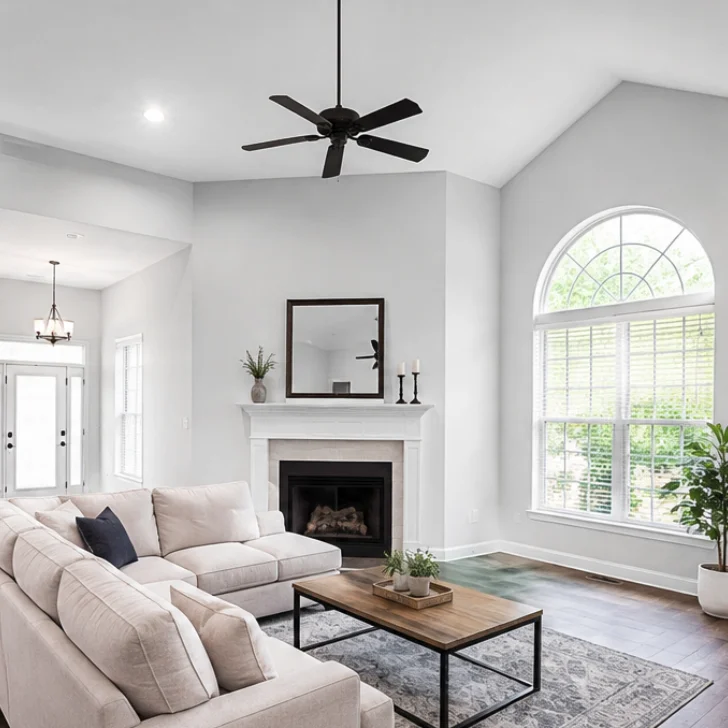
Article image – Finished Vancouver-style living room after interior painting. Image source: Fast Fox Painting
6. Worn or Damaged Woodwork
6. Worn or Damaged Woodwork is one of the first conditions worth evaluating before paint is treated as the solution. Baseboards, window stools, door casings, and exterior trim often show dents, open grain, exposed wood, or previous coating buildup. That distinction matters because a new coating can make a surface look better for a short period without correcting what is happening underneath it. Painting without addressing those defects can produce a surface that is a new color but still visibly rough, chipped, or uneven. In Vancouver, WA, local exposure and the age or construction of the property can make this condition show up differently from one home to the next. A professional pre-paint inspection is designed to separate cosmetic wear from conditions that can affect adhesion, uniformity, or the life of the finish.
The practical response is to clean, sand, repair, and prime damaged wood based on its condition, while preserving crisp profiles and avoiding excessive paint buildup in detailed millwork. The goal is not to add unnecessary steps; it is to create a sound, clean, dry, and appropriately prepared surface before primer or finish paint is applied. When preparation is matched to the actual condition of the substrate, the finish has a much better chance of looking consistent at corners, transitions, repaired areas, and high-wear locations instead of telegraphing the same defect through the new paint.
7. Possible Lead-Based Paint on Pre-1978 Surfaces
7. Possible Lead-Based Paint on Pre-1978 Surfaces is one of the first conditions worth evaluating before paint is treated as the solution. Older housing may contain lead-based paint beneath newer coatings, and sanding, scraping, or other disturbance can create hazardous dust. That distinction matters because a new coating can make a surface look better for a short period without correcting what is happening underneath it. The preparation method becomes a safety and compliance issue, not just a finish-quality decision. In Vancouver, WA, local exposure and the age or construction of the property can make this condition show up differently from one home to the next. A professional pre-paint inspection is designed to separate cosmetic wear from conditions that can affect adhesion, uniformity, or the life of the finish.
The practical response is to determine whether lead-safe requirements apply and use certified lead-safe practices when regulated painted surfaces will be disturbed. The goal is not to add unnecessary steps; it is to create a sound, clean, dry, and appropriately prepared surface before primer or finish paint is applied. When preparation is matched to the actual condition of the substrate, the finish has a much better chance of looking consistent at corners, transitions, repaired areas, and high-wear locations instead of telegraphing the same defect through the new paint.
How to Plan house painters Vancouver WA With Fewer Surprises
A strong house painters Vancouver WA project in Vancouver, WA should feel organized before the first full coat goes on. Fast Fox Painting describes a four-step process that begins with a free consultation, moves into preparation and planning, continues through expert painting, and ends with a final inspection and walkthrough. For older-home repainting where the visible paint may be only one layer of the problem, that sequence is useful because it puts the highest-risk decisions – repairs, protection, product selection, color confirmation, and surface readiness – ahead of the finish work.
The estimate should also make the scope easy to understand. Homeowners benefit from knowing which surfaces are included, what repairs are part of preparation, whether primer is required, how many finish coats are planned, how furniture or landscaping will be protected, and what the expected work window looks like. Clear scope is especially important when a project includes more than one surface type, because walls, cabinets, trim, siding, masonry, and exterior wood do not necessarily need the same products or preparation methods.
If you are comparing painting contractors, look beyond the final color. Ask how the crew will identify moisture or adhesion problems, what they will do with glossy or previously coated surfaces, how they will protect adjacent materials, and how touch-ups are handled at the end. Those questions reveal far more about the likely outcome than a paint brand name by itself.
If you want the scope defined before colors and scheduling are finalized, request a free estimate from Fast Fox Painting so the existing surfaces, preparation needs, protection plan, and finish expectations can be reviewed together.
Project Planning Checklist
- Walk the interior and exterior in daylight and mark defects before estimating.
- Ask whether peeling or staining has an active moisture source.
- Confirm how patches, cracks, glossy surfaces, and bare substrate will be primed.
- For pre-1978 homes, ask how lead-safe requirements will be handled when paint is disturbed.
- Confirm which repairs are included in the painting scope and which require another trade.
- Choose colors only after understanding whether repaired areas or new materials will change the final appearance.

Article image – Finished exterior after professional residential painting. Image source: Fast Fox Painting
Questions to Ask Before You Approve the Painting Scope
What preparation is included?
Ask the estimate to distinguish ordinary prep from repairs that are outside the painting scope. The answer should address cleaning, sanding or deglossing, patching, caulking, scraping, primer, masking, and how damaged substrate will be handled.
Which product system is being used, and why?
Product selection should match the substrate and the way the surface is used. A wall, exterior siding, cabinet door, baseboard, and commercial corridor can all have different durability, adhesion, washability, and sheen requirements.
How will adjacent surfaces be protected?
Protection is part of craftsmanship. Floors, furniture, counters, landscaping, fixtures, hardware, windows, roofing, and neighboring surfaces should be accounted for before preparation or coating begins.
What does the final walkthrough cover?
A useful walkthrough checks coverage, cut lines, repaired areas, doors and edges, cleanup, touch-ups, and any locations that were difficult to inspect while equipment or masking was in place.
Frequently Asked Questions
Can painters simply paint over hairline cracks?
Very small stable cracks may be fillable as part of normal preparation, but recurring or widening cracks should be evaluated for the underlying cause before they are hidden with paint.
Do all old homes require primer everywhere?
No. Primer should be selected for the condition and substrate. Bare areas, stains, repairs, glossy surfaces, and adhesion problems may need targeted or full priming depending on the project.
What if the wall has water stains but feels dry now?
The source should still be confirmed. A dry surface today does not prove the leak or moisture condition is permanently resolved, and some stains also need a blocking primer before finish paint.
How do I know if lead-safe rules apply?
EPA rules commonly apply when paid renovation, repair, or painting work disturbs lead-based paint in pre-1978 housing. A qualified contractor can explain the project-specific requirements.
When should I request an estimate?
An estimate is most useful after you can show the painter the actual surfaces and known problem areas, but before you commit to colors or a schedule that assumes no repairs will be needed.
Planning a Residential and interior painting Project in Vancouver, WA?
If you are researching house painters Vancouver WA and want a clear plan for preparation, products, protection, and finish quality, Fast Fox Painting can inspect the project and provide a detailed estimate. The best painting projects do more than change color: they solve visible surface problems, create clean transitions, and leave the property with a finish that fits how the space is actually used.